






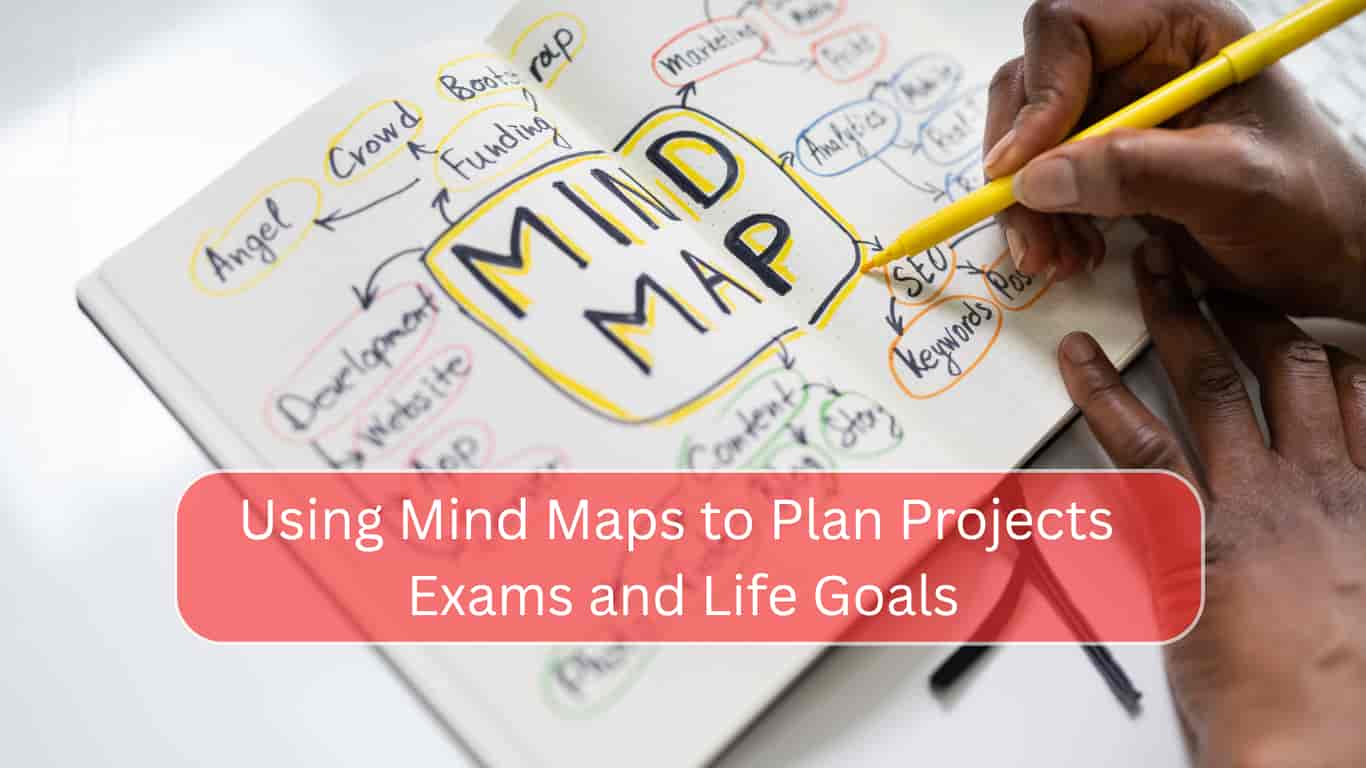
Using Mind Maps to Plan Projects, Exams, and Life Goals
Planning can often feel overwhelming. Whether it’s tackling a complex project, preparing for exams, or mapping out life goals, organizing thoughts and ideas efficiently is key to success. One of the most effective tools for this purpose is mind mapping. Mind maps are visual diagrams that organize information hierarchically, allowing you to see connections, prioritize tasks, and make better decisions. Here’s a detailed guide on using mind maps for projects, exams, and life goals.
1. What is a Mind Map?
- A mind map is a diagram used to visually organize information.
- It starts with a central idea, and branches out into related subtopics, tasks, or concepts.
- The structure encourages clarity, creativity, and logical thinking.
- Famous author Tony Buzan popularized mind maps, emphasizing their use for learning, brainstorming, and planning.
Example: For exam preparation, the central idea could be “Biology Final Exam,” branching into “Genetics,” “Evolution,” “Human Anatomy,” etc., with further sub-branches for topics, formulas, or notes.
2. Benefits of Using Mind Maps
- Clarity and Organization
- Mind maps help break down large, complex tasks into manageable chunks.
- They provide a visual overview of projects, making it easier to prioritize tasks.
- Boosts Memory and Learning
- The combination of visuals, colors, and keywords helps retain information.
- Studies show mind mapping improves recall and understanding compared to linear note-taking.
- Enhances Creativity
- Mind maps allow free-flowing ideas without rigid structure.
- Helps discover new connections and solutions that may be overlooked in traditional lists.
- Time Management
- By visually planning your tasks, you can allocate time more effectively.
- Helps identify critical tasks that need immediate attention versus those that can wait.
- Motivation and Focus
- Seeing all tasks and goals in one diagram reduces mental clutter.
- Provides a sense of progress as you check off completed branches.
3. Using Mind Maps for Projects
Mind mapping is ideal for planning complex projects. Here’s how to do it effectively:
- Define the Central Goal
- Start with the main objective at the center of your mind map.
- Example: “Launch New Product.”
- Identify Key Areas
- Branch out to essential components: “Marketing,” “Design,” “Budget,” “Team Roles.”
- Break Down Tasks
- Create sub-branches for smaller tasks under each category.
- Example: Under “Marketing” → “Social Media Ads,” “Email Campaigns,” “Influencer Outreach.”
- Set Deadlines
- Assign timelines to each task for better time management.
- Visual timelines help avoid missing deadlines.
- Assign Responsibility
- If working in a team, attach names to tasks to ensure accountability.
- Track Progress
- Update the mind map as tasks are completed.
- Color coding (e.g., green for done, yellow for in-progress) is effective.
Tip: Mind mapping tools like XMind, MindMeister, or Miro make collaborative project planning easier.
Conclusion
Mind mapping is more than a note-taking technique—it’s a versatile planning tool for students, professionals, and anyone striving for personal or academic growth. Whether you are organizing a project, preparing for exams, or planning life goals, mind maps provide clarity, structure, and motivation. By using colors, visuals, and hierarchical branches, you can turn overwhelming tasks into actionable, manageable plans, and stay focused on what truly matters.
Start creating your first mind map today and experience the power of visual thinking in achieving your goals efficiently.