




Group Discussions & Interviews: Tips for Students to Build Confidence Early
For many students, the thought of sitting in a group discussion or facing an interview feels nerve-wracking. Sweaty palms, racing heart, or forgetting what you wanted to say—it happens to the best of us. But here is the truth: confidence in group discussions (GDs) and interviews is not something you are born with; it is something you can build with practice.
The earlier you start preparing, the better equipped you will be for college admissions, internships, and even future jobs.
Why GDs and Interviews Matter
- College Admissions: Many top colleges include group discussions or personal interviews as part of their selection process.
- Scholarships & Internships: Your ability to present yourself confidently can set you apart from others.
- Career Growth: Strong communication and presence help in leadership roles and workplace opportunities.
Tips to Build Confidence for Group Discussions
1. Stay Informed
Read newspapers, follow current events, and explore multiple perspectives on issues. Being well-read gives you material to contribute.
2. Practice Speaking in Groups
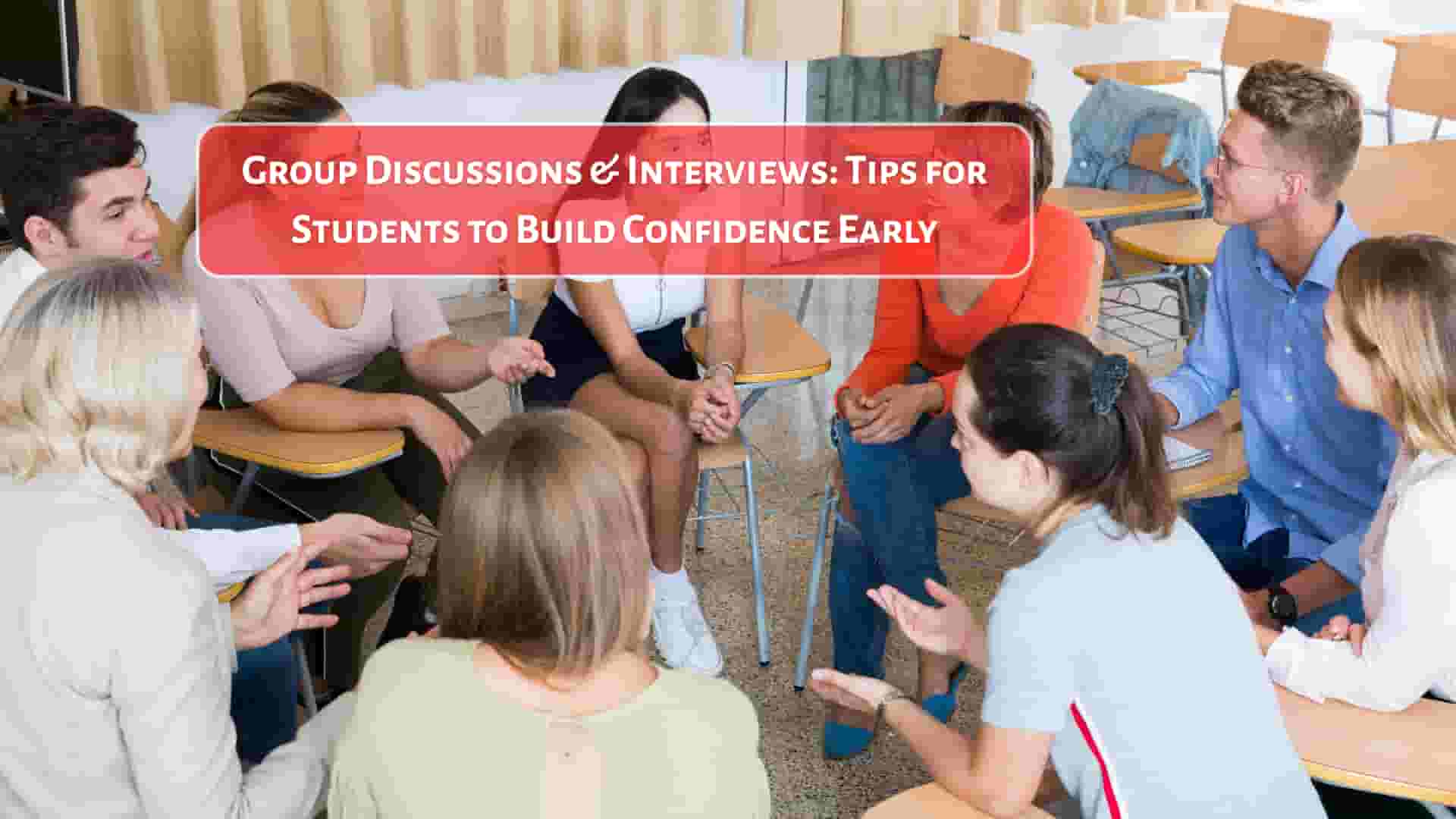
Start with small group discussions with friends or classmates. The more you practice, the easier it becomes.
3. Listen Actively
Confidence is not just about speaking. Pay attention to others, build on their points, and show that you respect different opinions.
4. Structure Your Points
Before speaking, quickly think of a beginning, middle, and conclusion. This makes your contribution clearer and more impactful.
5. Maintain Body Language
Sit straight, make eye contact, and use open gestures. Confident body language often speaks louder than words.
Tips to Build Confidence for Interviews
1. Know Yourself
Prepare answers for common questions like “Tell me about yourself,” “What are your strengths and weaknesses?” or “Why should we select you?”
2. Research the Institution or Role
Showing awareness about the college, course, or company signals genuine interest.
3. Practice Mock Interviews
Role-play with a teacher, mentor, or even in front of a mirror. Familiarity reduces nervousness.
4. Dress Neatly
First impressions matter. Wearing clean, simple, and appropriate clothes boosts your confidence.
5. Stay Calm Under Pressure
If you do not know the answer, it is okay to admit it politely. Confidence also means handling uncertainty gracefully.
Long-Term Confidence-Building Habits
- Join debates, theatre, or public speaking clubs.
- Record yourself while speaking to improve tone and clarity.
- Focus on improving your vocabulary and language skills.
- Take feedback positively and work on it.
Final Thoughts
Group discussions and interviews may feel intimidating at first, but with preparation and practice, they can become opportunities to shine. Remember—confidence is built step by step. The earlier you begin, the more natural it will feel when it truly matters.