






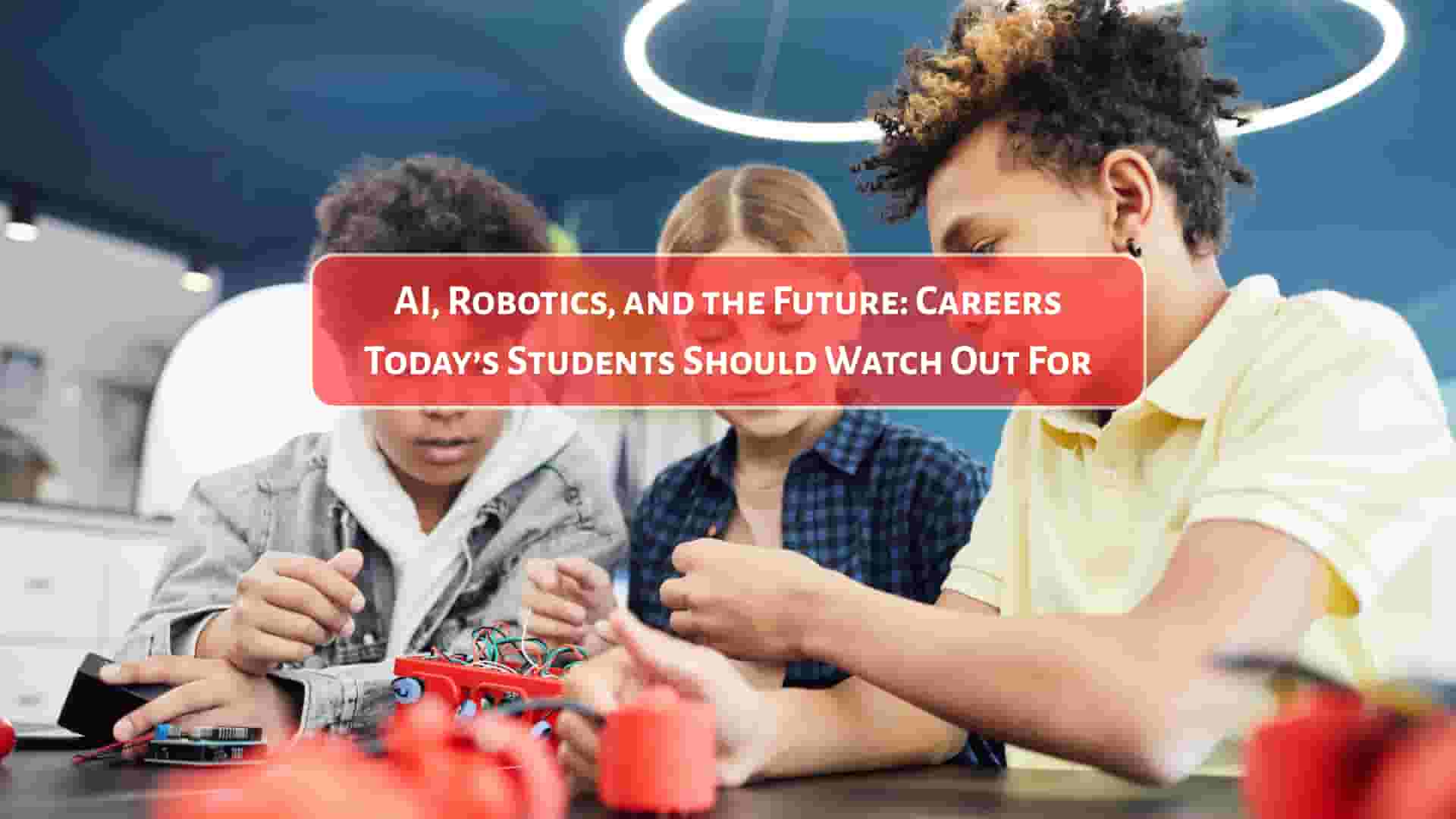
AI, Robotics, and the Future: Careers Today’s Students Should Watch Out For
The future of work is changing faster than ever. Technologies like Artificial Intelligence (AI) and Robotics are no longer just science fiction—they are shaping industries, creating opportunities, and transforming the skills employers are looking for. For today’s students, this means exploring exciting new career paths that did not even exist a decade ago.
Let us look at how AI and Robotics are changing the world of work, and what careers students should keep an eye on.
Why AI and Robotics Matter
- Automation: Machines and algorithms can handle repetitive tasks, freeing humans to focus on creative problem-solving.
- Innovation: From self-driving cars to medical robots, technology is making life easier and industries more efficient.
- Global Demand: Companies around the world are looking for skilled professionals in AI and Robotics, making it a future-proof career choice.
Career Paths in AI and Robotics
1. Artificial Intelligence Engineer
AI engineers design systems that can think and learn, such as chatbots, recommendation engines, or smart assistants.
2. Robotics Engineer
These professionals build and program robots that can perform tasks—from manufacturing to healthcare.
3. Data Scientist
AI relies on data. Data scientists analyse and interpret large amounts of information to train intelligent systems.
4. Machine Learning Specialist
Machine learning experts create algorithms that allow computers to improve their performance without being directly programmed.
5. AI in Healthcare
Robotics-assisted surgery, diagnostic AI tools, and personalised treatment plans are opening roles for students interested in both medicine and technology.
6. Human-Robot Interaction Specialist
As robots become part of everyday life, specialists will be needed to design how humans and robots work together smoothly.
7. AI Ethics Expert
With power comes responsibility. Ethical experts ensure that AI systems are fair, transparent, and safe to use.
Skills Students Should Start Building
- Strong foundations in math and computer science
- Programming languages like Python, C++, or Java
- Understanding of data analysis and statistics
- Creative problem-solving and critical thinking
- Teamwork and communication are required to work on interdisciplinary projects
Challenges in the Field
While the opportunities are endless, students should also be aware of challenges:
- Rapidly changing technology requires constant learning
- Ethical concerns about privacy, job loss, and fairness
- High competition in global job markets
But with the right preparation, these challenges can turn into opportunities.
Final Thoughts
AI and Robotics are not just future buzzwords—they are today’s reality. For students willing to explore these fields, the possibilities are endless: from designing smart machines to solving real-world problems that impact millions of lives.
The key is to stay curious, keep learning, and embrace both the technical and human sides of innovation.